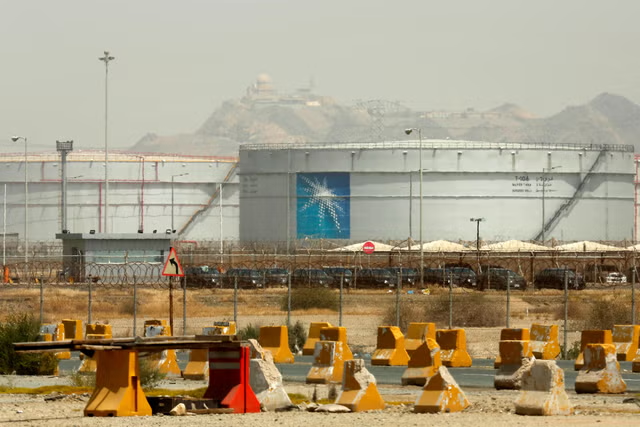
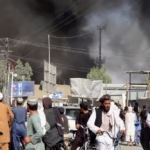
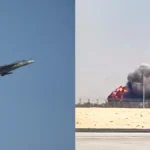
On March 2, 2026, Saudi Aramco, the world’s largest oil producer, faced a serious disruption after a drone strike targeted its critical Ras Tanura refinery along Saudi Arabia’s Gulf coast. The refinery, capable of processing approximately 550,000 barrels per day (bpd), temporarily halted operations as a precaution.
The attack came amid escalating Iran-Israel tensions, with drones reportedly launched across the region in retaliation for U.S.-Israeli actions. A fire triggered at the site was quickly brought under control, and sources confirmed the situation remained contained while damage assessments were underway.
📈 Oil Market Reaction
Global markets reacted immediately. Brent crude futures surged nearly 10%, driven by fears of potential disruptions in Gulf exports and shipping lanes. Ras Tanura is one of the world’s most important oil export terminals, making it highly sensitive to geopolitical instability.
Investors grew concerned that prolonged outages could strain global supply chains, especially as Gulf shipping routes serve as critical arteries for international energy trade.
🌍 Regional Escalation & Gulf Risks
The situation intensified as reports indicated similar drone activity affecting areas in the UAE and Oman. The broader Middle East energy corridor remains vulnerable during heightened geopolitical friction.
Any sustained disruption in Saudi infrastructure could amplify volatility in global oil markets, particularly at a time when energy demand remains strong and inflation concerns persist worldwide.
🏗️ Aramco’s Expansion Plans Before the Strike
Just days before the incident, Aramco was advancing major gas expansion initiatives, including the Tanajib gas project, expected to process 2.6 billion cubic feet per day by late 2026.
The company aims to boost sales gas capacity by 80% by 2030, targeting production of 6 million barrels of oil equivalent daily. These projects are projected to generate USD 12–15 billion in incremental cash flows, supporting diversification beyond crude exports.
Aramco had also outlined plans for LNG expansion in 2026 and strategic AI investments to strengthen its global competitiveness.
⚖️ Strategic Energy Security Implications
This temporary shutdown highlights vulnerabilities within key Middle Eastern energy infrastructure. While Aramco maintains massive reserves and strong operational resilience, the event underscores growing geopolitical risks facing global energy security.
Market participants are closely monitoring production updates and potential ripple effects across supply chains. A swift operational restart could stabilize prices, but continued tensions may keep volatility elevated.
🔎 Market Outlook
Energy investors now focus on diplomatic developments, shipping route stability, and Aramco’s production guidance. In an interconnected global economy, even short-lived disruptions can trigger substantial price movements.
Stay tuned for further updates as the situation evolves.