
Chandra Grahan 2026: Sutak on March 3 Delays Holi in Bihar

Chandra Grahan

“When the Moon Fades, Faith Takes the Lead”

India will witness the first Chandra Grahan (Lunar Eclipse) of 2026 on March 3, coinciding with Falgun Purnima. The eclipse triggers Sutak Kaal from early morning, affecting religious activities and shifting Holi celebrations in Bihar, especially in the Patna region.

Table of Contents

  1. Eclipse & Sutak Timings
  2. Religious Restrictions During Sutak
  3. Impact on Holi in Bihar
  4. Visibility Across India & World
  5. What To Do After the Eclipse

Eclipse & Sutak Timings (IST)

The partial lunar eclipse on March 3, 2026, will follow this schedule:

Event Time (IST)
Eclipse Begins 3:20 PM
Peak Time 5:04 PM
Eclipse Ends 6:46 – 6:48 PM
Sutak Begins 6:20 – 6:23 AM

Total Duration: Approximately 3 hours 27 minutes.
Sutak begins 9 hours before the eclipse and ends with the conclusion of the Grahan.

Religious Restrictions During Sutak

During Sutak Kaal, several religious and daily activities are restricted:

  • No puja, hawan, yagna, or new manglik works.
  • Temples remain closed.
  • Cooking and eating are avoided after the last meal before Sutak begins.
  • Physical worship of idols is prohibited.
  • Pregnant women, children, and elderly are advised extra precautions.

Allowed: Mental chanting, meditation, and mantra jap.

Impact on Holi in Bihar

Because the eclipse falls on Falgun Purnima, Holi celebrations in Bihar — including Patna, Samastipur, and Banka — are shifted.

  • March 2 Night: Holika Dahan completed before Bhadra period.
  • March 3: No color play due to Sutak and eclipse.
  • March 4: Holi celebrations as per local Panchang guidance.

Local religious authorities have confirmed March 4 as the appropriate date to maintain shastra compliance.

Visibility Across India & Worldwide

The eclipse will be visible mainly in:

  • Eastern India (Patna, Bihar region)
  • Northeast India
  • Andaman & Nicobar Islands
  • East Asia
  • Australia
  • Pacific regions
  • Americas

Some regions may witness partial visibility after moonrise.

What To Do After the Eclipse

Post-eclipse rituals traditionally include:

  • Taking a holy bath
  • Cleaning the home
  • Donating food or charity
  • Resuming temple worship

These practices symbolize purification and spiritual renewal.

Final Takeaway

The March 3, 2026 Chandra Grahan brings not just a celestial event but a spiritual pause across India. With Sutak starting early morning, Bihar shifts Holi to March 4 to honor tradition and religious guidelines.

Stay informed. Celebrate responsibly. Follow tradition with awareness.
 

Read more

F-15 Down in Kuwait

F-15

Sky on Fire: Gulf Tensions Reach a Breaking Point

F-15E Crash in Kuwait

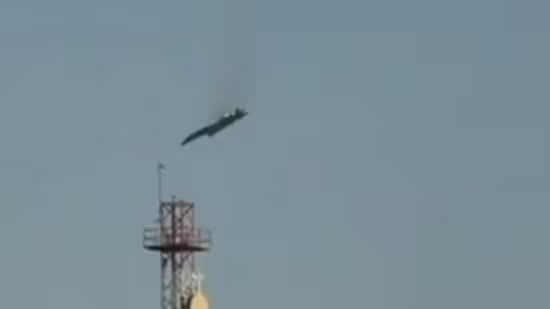
In early March 2026, a U.S. Air Force F-15E Strike Eagle crashed over Kuwait during a period of escalating tensions between the United States and Iran. The incident occurred as allied forces conducted retaliatory operations against Iranian-linked targets across the region.

Iranian state media circulated footage allegedly showing the aircraft spiraling before breaking apart mid-air. Reports indicate that both the pilot and weapons-systems officer successfully ejected. However, unconfirmed sources suggest they were later detained by local forces or armed groups, instantly turning the crash into a geopolitical flashpoint.

The crash has intensified diplomatic friction in the Gulf, raising concerns over direct confrontation and broader regional instability.

Rapid Middle-East Deployment

Even before the crash, the Pentagon had been accelerating the deployment of additional F-15E Strike Eagles to the Middle East. Approximately two dozen aircraft from the 494th Fighter Squadron based at RAF Lakenheath in the United Kingdom were repositioned to bolster U.S. airpower.

Supported by KC-135 aerial refueling tankers, the aircraft were tasked with strike and air-superiority missions amid rising threat levels. The move signaled Washington’s readiness to project force quickly while maintaining air dominance.

Despite the increasing integration of fifth-generation fighters like the F-35, the F-15 continues to play a crucial role in high-intensity combat scenarios due to its payload capacity, combat record, and adaptability.

Fleet Modernization & F-15EX Expansion

Beyond the immediate crisis, the U.S. Air Force is extending the service life of older F-15C/D Eagle variants. A limited group under the “Platinum Eagle” initiative is expected to remain operational through approximately 2030, primarily for homeland defense and airspace control missions.

Meanwhile, the F-15EX “Eagle II” program is expanding significantly. Originally planned as a 98-aircraft purchase, the fleet is now set to grow to 129 jets under updated defense budget allocations. The F-15EX features advanced radar, upgraded avionics, improved survivability, and expanded weapons capacity.

This dual strategy—extending legacy platforms while ramping up next-generation upgrades—ensures the F-15 family remains a backbone of U.S. and allied air forces well into the 2030s.

Why the F-15 Still Matters

More than four decades after its debut, the F-15 remains central to U.S. airpower strategy. Its combination of range, payload, and combat-proven performance makes it indispensable in volatile regions like the Middle East.

The Kuwait crash underscores not only the risks of modern aerial warfare but also the enduring reliance on fourth-generation fighters in an increasingly complex security landscape.


The March 2026 F-15 crash has amplified Gulf tensions at a critical moment. With rapid deployments and fleet upgrades underway, the F-15’s role in shaping regional security remains stronger—and more scrutinized—than ever.

Read more

Aramco Refinery Hit: Oil Jumps 10% After Gulf Drone Strike

Aramco

Energy Shockwaves: When One Strike Moves Global Markets

🚨 Drone Strike at Ras Tanura

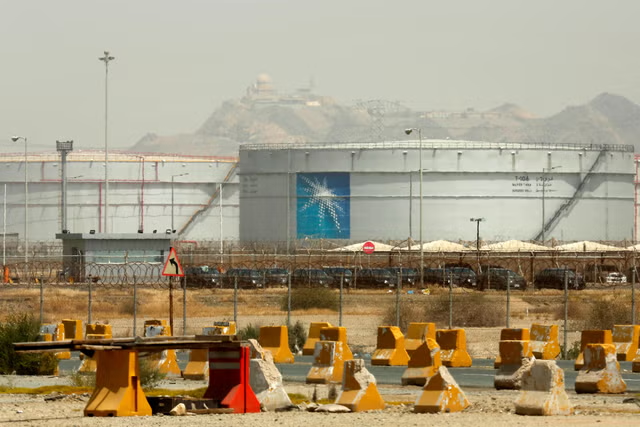
On March 2, 2026, Saudi Aramco, the world’s largest oil producer, faced a serious disruption after a drone strike targeted its critical Ras Tanura refinery along Saudi Arabia’s Gulf coast. The refinery, capable of processing approximately 550,000 barrels per day (bpd), temporarily halted operations as a precaution.

The attack came amid escalating Iran-Israel tensions, with drones reportedly launched across the region in retaliation for U.S.-Israeli actions. A fire triggered at the site was quickly brought under control, and sources confirmed the situation remained contained while damage assessments were underway.

📈 Oil Market Reaction

Global markets reacted immediately. Brent crude futures surged nearly 10%, driven by fears of potential disruptions in Gulf exports and shipping lanes. Ras Tanura is one of the world’s most important oil export terminals, making it highly sensitive to geopolitical instability.

Investors grew concerned that prolonged outages could strain global supply chains, especially as Gulf shipping routes serve as critical arteries for international energy trade.

🌍 Regional Escalation & Gulf Risks

The situation intensified as reports indicated similar drone activity affecting areas in the UAE and Oman. The broader Middle East energy corridor remains vulnerable during heightened geopolitical friction.

Any sustained disruption in Saudi infrastructure could amplify volatility in global oil markets, particularly at a time when energy demand remains strong and inflation concerns persist worldwide.

🏗️ Aramco’s Expansion Plans Before the Strike

Just days before the incident, Aramco was advancing major gas expansion initiatives, including the Tanajib gas project, expected to process 2.6 billion cubic feet per day by late 2026.

The company aims to boost sales gas capacity by 80% by 2030, targeting production of 6 million barrels of oil equivalent daily. These projects are projected to generate USD 12–15 billion in incremental cash flows, supporting diversification beyond crude exports.

Aramco had also outlined plans for LNG expansion in 2026 and strategic AI investments to strengthen its global competitiveness.

⚖️ Strategic Energy Security Implications

This temporary shutdown highlights vulnerabilities within key Middle Eastern energy infrastructure. While Aramco maintains massive reserves and strong operational resilience, the event underscores growing geopolitical risks facing global energy security.

Market participants are closely monitoring production updates and potential ripple effects across supply chains. A swift operational restart could stabilize prices, but continued tensions may keep volatility elevated.

🔎 Market Outlook

Energy investors now focus on diplomatic developments, shipping route stability, and Aramco’s production guidance. In an interconnected global economy, even short-lived disruptions can trigger substantial price movements.

Stay tuned for further updates as the situation evolves.


Read more

Ayatollah Alireza Arafi Alive: Truth Behind Viral Death Rumors

Ayatollah

Facts Over Fear — Separating Rumors from Reality in the Iran Crisis


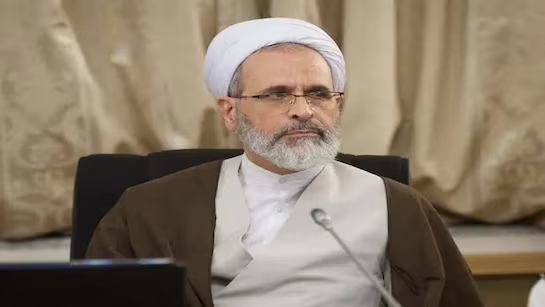
March 2, 2026: Viral claims alleging the death of Ayatollah Alireza Arafi in Israeli airstrikes have been widely circulated online. However, verified reports confirm that Arafi is alive and actively participating in Iran’s leadership transition.

Origin of the Death Rumors

Unconfirmed claims began circulating between March 1–2, 2026, alleging that Ayatollah Alireza Arafi was killed during a new wave of Israeli airstrikes targeting Iranian command centers.

The rumors appear to have originated from Israeli media sources and were amplified on social platforms, including posts by former US National Security Advisor Mike Flynn. Despite the widespread circulation, no Iranian state media, international news agencies, or verified intelligence sources have confirmed these claims.

Fact Check: There is currently no credible evidence supporting reports of Arafi’s death.

Context of His Appointment

Ayatollah Arafi was appointed on February 28, 2026, as the jurist member of Iran’s three-person interim leadership council.

The council includes:

  • President Masoud Pezeshkian
  • Chief Justice Gholamhossein Mohseni-Ejei
  • Ayatollah Alireza Arafi

This interim body was formed following the confirmed killing of Supreme Leader Ayatollah Ali Khamenei in coordinated US-Israeli airstrikes on Tehran.

The council is responsible for carrying out supreme leadership duties until the Assembly of Experts selects a permanent successor.

Iran declared 40 days of national mourning and reported over 200 deaths and 700 injuries from the strikes.

Who Is Ayatollah Alireza Arafi?

Born in 1959 in Meybod, Ayatollah Arafi is considered a senior clerical figure closely aligned with Iran’s previous leadership.

Key roles include:

  • Friday prayer leader in Qom
  • Chairman of Al-Mustafa International University
  • Appointed to the Guardian Council in 2019

Through the Guardian Council, he has played a role in vetting legislation and political candidates, positioning him as an influential figure within Iran’s governance structure.

Broader Iran-Israel Conflict Escalation

The regional situation remains volatile following the reported deaths of several high-ranking officials, including Iran’s army chief and defense minister.

Iranian leadership has labeled the strikes as an act of war, while US political figures have issued strong statements condemning Iranian leadership.

Military exchanges between Iran and Israel have reportedly continued in the aftermath, increasing global tensions and uncertainty across the Middle East.

Final Fact-Check Verdict

As of March 2, 2026, Ayatollah Alireza Arafi remains alive. Claims of his death stem from unverified sources and have not been substantiated by credible international or Iranian media outlets.

Treat viral reports with caution. Always rely on verified sources during times of geopolitical crisis.

Read more

🌕 Blood Moon 2026: A Rare Red Spectacle Lights Up the Sky

Blood Moon

"When the Moon Turns Red, the World Looks Up."

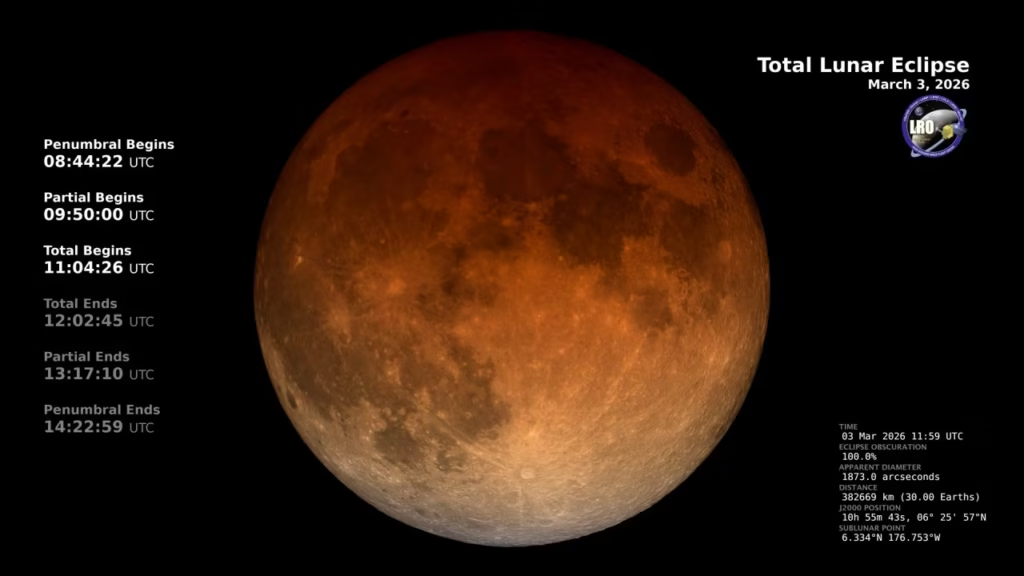
A breathtaking Total Lunar Eclipse, popularly known as the “Blood Moon,” will captivate skywatchers on March 3, 2026. This marks the first lunar eclipse of 2026 and the last total lunar eclipse visible globally until New Year’s Eve 2028–2029. With nearly 41% of Earth’s population able to witness totality, this celestial event promises a safe and unforgettable show.

📌 Table of Contents

⏳ Event Timeline (UTC)

The eclipse unfolds gradually over 5 hours and 39 minutes, transitioning through penumbral, partial, and total phases.

  • 08:44 UTC – Penumbral Eclipse Begins
  • 09:50 UTC – Partial Eclipse Begins
  • 11:04 UTC – Totality Begins
  • 11:34 UTC – Maximum Eclipse (Peak Red Glow)
  • 14:23 UTC – Eclipse Ends

During totality, the Moon will glow a dramatic reddish hue as sunlight bends through Earth’s atmosphere — the reason behind the iconic “Blood Moon” effect.

🌍 Where Will It Be Visible?

Prime viewing regions include:

  • Americas – Early morning hours
  • Eastern Asia – Evening to night
  • Australia – Night sky spectacle
  • Pacific Region – Excellent viewing conditions

In North America (e.g., New York), penumbral and partial phases will be visible before dawn, though totality may occur below the horizon. Europe and Africa will unfortunately miss this event.

🌎 Approximately 3.34 billion people (41% of Earth’s population) will witness at least some totality.

🔭 Key Astronomical Facts

  • Umbral Magnitude: 1.1526 (Full 100% Moon coverage)
  • Saros Series: 133 (27th eclipse of 71)
  • Follows: Annular Solar Eclipse on Feb 17, 2026
  • Constellation: Leo
  • Orbital Position: Post-perigee
  • Rare Event: Occultation of galaxy NGC 3423 over North America during totality

The brief overlap with deep-sky object NGC 3423 makes this eclipse particularly rare for astronomers.

📊 Eclipse Phase Breakdown

Phase Duration Global Peak
Totality 58 minutes 11:34 UTC
Partial 2 hours 29 minutes N/A
Penumbral 2 hours 12 minutes N/A

✨ Why This Eclipse Is Special

This Blood Moon is the third in a near-tetrad sequence following total lunar eclipses on March 14 and September 8, 2025. Interestingly, it coincides with China’s Lantern Festival — the first time since 2017 this cultural event aligns with a total lunar eclipse.

With its rare astronomical alignments and long global gap until the next widely visible total eclipse, March 3, 2026 becomes a must-watch event.

👀 How to Watch Safely

  • ✅ No special glasses required (unlike solar eclipses)
  • ✅ Completely safe for naked-eye viewing
  • 🔭 Binoculars or telescopes enhance red tones and lunar detail
  • 🌤️ Check local weather forecasts for clear skies

Weather models currently suggest favorable conditions across much of the Pacific region.

🌌 Final Word

The March 3, 2026 Blood Moon promises a spectacular, safe celestial show connecting continents under one glowing red sky. Mark your calendar, set your alarms, and prepare to witness one of the most dramatic lunar displays until 2028.


Read more

Iran Leadership Crisis: Arafi Steps Into Power After Khamenei’s Deat

Arafi

“From Turbulence to Transition — Who Will Lead Iran Next?”

1️⃣ Emergency Leadership Council Formed

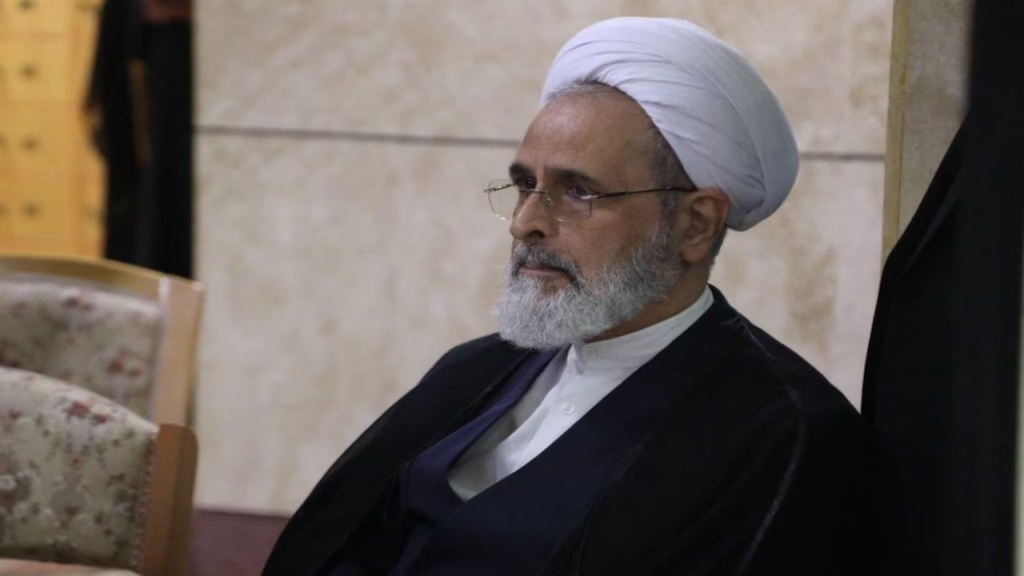
Following the reported killing of Iran’s Supreme Leader Ali Khamenei in a US-Israeli strike on February 28, 2026, Iran’s Expediency Discernment Council swiftly appointed Ayatollah Alireza Arafi as the jurist member of a temporary three-person Leadership Council.

He now serves alongside President Masoud Pezeshkian and judiciary chief Gholam-Hossein Mohseni-Ejei. Under Iran’s constitution, this council assumes supreme leadership duties until the Assembly of Experts selects a permanent successor.

2️⃣ Who Is Ayatollah Alireza Arafi?

Born in 1959 in Maybod, Yazd province, Arafi comes from a prominent clerical family. His father was closely associated with Ayatollah Ruhollah Khomeini, founder of the Islamic Republic.

Arafi currently:

  • Heads Iran’s nationwide seminary system
  • Sits on the powerful Guardian Council
  • Serves within the Assembly of Experts

Multilingual in Arabic and English, he is considered technologically aware, even advocating for AI tools to expand Shia ideological outreach.

3️⃣ Regional War and Escalating Tensions

The strike that reportedly killed Khamenei triggered immediate retaliation threats. Iran’s Revolutionary Guard pledged its “most intense offensive” against US and Israeli targets.

Airspace disruptions followed:

  • Emirates and Qatar suspended flights
  • Israeli airspace temporarily closed
  • Travelers stranded amid counterattacks

The conflict rapidly expanded into a broader regional confrontation, intensifying global energy and security concerns.

4️⃣ Arafi’s Role, Power & Influence

Though not traditionally viewed as a security hardliner, Arafi has held critical institutional roles trusted by Khamenei. His administrative control over religious seminaries strengthens ideological continuity during the transition.

From 2009–2018, he led Al-Mustafa International University, claiming tens of millions of global Shia conversions — figures widely debated by analysts.

In 2022, he also met Pope Francis in a rare interfaith engagement, signaling diplomatic outreach capabilities beyond domestic politics.

5️⃣ Controversies and Sanctions

During the 2022 Mahsa Amini protests, Arafi warned that attacks on clergy would be met harshly, stating: “The turban will become their shroud.”

Canada later sanctioned him for alleged roles in supporting crackdowns. His Guardian Council position and seminary leadership tie him firmly to Iran’s ideological structure.

6️⃣ What Happens Next?

The Assembly of Experts now faces mounting pressure to appoint a permanent successor. Arafi’s placement on the temporary council positions him as a key influencer — though whether he emerges as a permanent contender remains uncertain.

Global markets are closely watching:

  • Potential closure risks in the Strait of Hormuz
  • Scale of Iranian retaliation
  • Long-term regional stability

As of March 1, 2026, Arafi’s appointment signals institutional continuity amid crisis — but Iran’s long-term leadership trajectory remains unresolved.


Stay tuned as the Middle East enters one of its most defining political transitions in decades.


Read more

South Africa Defeat Zimbabwe by 5 Wickets to Top Super 8 Group 1

Zimbabwe


🔥 SA Unstoppable! 7 in a Row & Semi-Final Bound

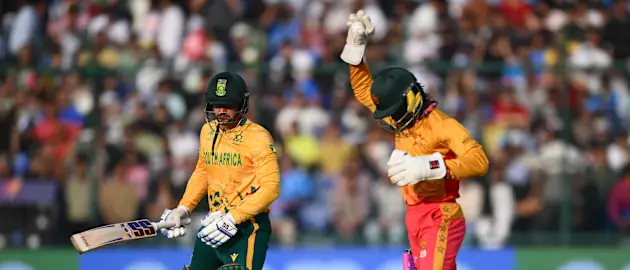
New Delhi | March 1, 2026 — South Africa continued their dream run in the ICC Men’s T20 World Cup 2026, defeating Zimbabwe by 5 wickets in a thrilling Super 8 Group 1 clash. With this victory, the Proteas remain unbeaten with seven straight wins and seal their semi-final spot against New Zealand.

📌 Table of Contents

🏏 Match Summary

Zimbabwe skipper Sikandar Raza won the toss and opted to bat first. Zimbabwe posted a competitive 153/7 in 20 overs, but South Africa chased down the target in just 17.5 overs to clinch a 5-wicket win.

🇿🇼 Zimbabwe’s Fighting Total

Zimbabwe faced early trouble at 28/2 after sharp spells from Kwena Maphaka and Anrich Nortje. However, captain Sikandar Raza played a captain’s knock, smashing 73 off 43 balls with 6 fours and 4 sixes.

Raza steadied the innings with counter-attacking cricket. The powerplay ended at 45/2, showing promise, but middle-order inconsistencies prevented Zimbabwe from crossing 170.

Lungi Ngidi, now South Africa’s leading T20I wicket-taker, struck crucial blows to restrict the late surge despite quick runs from Clive Madande.

🇿🇦 South Africa’s Power Chase

Chasing 154, South Africa came out aggressively. The highlight was Dewald Brevis’s explosive 42 off just 18 balls, which completely shifted momentum.

Brevis shared a blistering 50-run partnership off 25 balls with David Miller, dismantling Zimbabwe’s bowling attack. Though a few late wickets caused minor jitters, Tristan Stubbs and George Linde calmly finished the job.

South Africa reached the target in 17.5 overs, showcasing their depth and composure.

⭐ Key Performances

Zimbabwe

  • Sikandar Raza – 73 (43)
  • Strong powerplay start but middle-order collapse

South Africa

  • Dewald Brevis – 42 (18)
  • David Miller – Impactful partnership
  • Lungi Ngidi – Key wickets (11 in tournament)
  • Marco Jansen – 11 wickets in tournament

The Brevis-Miller partnership proved decisive as Zimbabwe’s bowlers failed to defend a competitive total.

📊 Super 8 Standings & Semi-Final Scenario

South Africa finished top of Super 8 Group 1 with 4 wins from 4 matches — including a big win over India earlier.

They now face New Zealand (Group 2 runners-up) in the semi-final at Eden Gardens.

Zimbabwe, despite exiting after losses to West Indies, India, and South Africa, achieved a major milestone by reaching the Super 8 stage after missing out in 2024.

🚀 What’s Next?

After finishing runners-up in the 2024 edition, South Africa are now serious title contenders. With an unbeaten streak and strong bowling attack led by Ngidi and Jansen, the Proteas look determined to lift their maiden T20 World Cup trophy.

Can they finally go all the way?

Stay tuned for more ICC T20 World Cup 2026 updates.


Read more

IND vs WI Super 8 Showdown: One Win Away from Glory!

Super

“One Match. One Mission. Semi-Final or Exit!”

🏏 Match Overview

The 52nd match of the ICC Men’s T20 World Cup 2026 Super Eights Group 1 features a high-voltage clash between India and West Indies at Eden Gardens, Kolkata, on March 1, 2026. This virtual knockout determines semi-final qualification — the winner advances, while the loser faces elimination.

With massive fan presence and playoff pressure, the Super 8 stage has reached its most decisive moment.

🪙 Toss & Early Momentum

India won the toss and elected to bowl first, aiming to capitalize on early evening conditions. The match began at 6:30 PM IST under electrifying atmosphere.

Jasprit Bumrah marked his run-up with precision, immediately testing the West Indies top order. Early overs reflected disciplined bowling and tactical field placements, setting the tone for a competitive encounter.


Stay tuned for live updates, over-by-over action, partnerships, and match-defining moments from this blockbuster Super 8 encounter.


Read more

ICAI CA Final Result 2026 Today: Big Moment for Aspirants

ICAI

“Your Hard Work. Your Result. Your Future.”

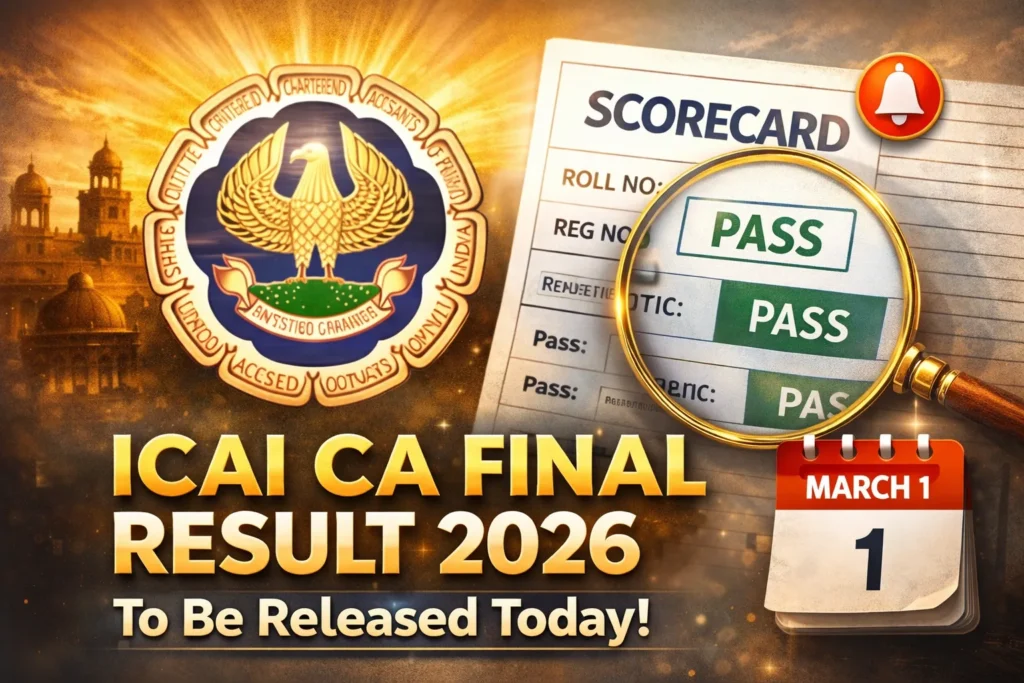
The The Institute of Chartered Accountants of India (ICAI) is set to declare the CA Final January 2026 results by the evening of March 1, 2026. As of this morning, the result link is not yet activated, building massive anticipation among lakhs of aspirants across India.

📌 Table of Contents

  1. Official Announcement by ICAI
  2. How to Check CA Final Result 2026
  3. January 2026 Exam Overview
  4. Pass Percentage & Competition Level
  5. What After the Results?
  6. Important Official Links

Official Announcement by ICAI

On February 26, 2026, ICAI officially confirmed that the CA Final January 2026 results will be declared by the evening of March 1, 2026. According to the notification issued by Joint Secretary (Exams) CA Anand Kumar Chaturvedi, candidates can access their results online using their Roll Number and Registration Number.

This timeline follows ICAI’s usual 6–8 week result declaration pattern, similar to the May 2025 session which was announced on July 6.

How to Check CA Final January 2026 Result

Once activated, candidates can check their results through the official portals:

Step-by-Step Guide:

  1. Visit the official ICAI result website.
  2. Click on “CA Final January 2026 Result”.
  3. Enter your Roll Number and Registration Number.
  4. Submit the details.
  5. Download and save your scorecard.

The scorecard will include:

  • Subject-wise marks
  • Total score
  • Pass/Fail status
  • Group-wise result

Important: No physical mark sheets will be sent. Due to heavy traffic, website delays are common — keep your credentials ready.

January 2026 CA Final Exam Overview

The January 2026 session covered both groups under the new ICAI scheme. The exam tested advanced subjects such as:

  • Financial Reporting
  • Advanced Auditing & Professional Ethics
  • Strategic Financial Management
  • Corporate & Economic Laws

Over 1 lakh candidates typically appear annually for CA Final, making it one of India’s toughest professional examinations.

Based on recent trends, CA Final pass percentages usually hover between 10% to 15%, reflecting the exam’s rigorous standard.

Past toppers like Heramb Maheswari (AIR 1 with 84.57% in a prior session) highlight the high level of competition and excellence required to secure ranks.

Official pass percentages and topper lists will be released shortly after the results go live.

What After the Results?

✅ If You Pass:

  • Eligible for ICAI Membership registration
  • Complete articleship (if pending)
  • Start independent practice or join firms
  • Rank holders receive certificates separately

❌ If You Don’t Clear:

  • Apply for verification of marks (within 1 month)
  • Prepare for May/June 2026 attempt
  • Analyze subject-wise performance

Remember — many successful CAs cleared after multiple attempts. Persistence is key.


The result link is expected to go live by evening today. Keep refreshing official portals for real-time updates and avoid unofficial sources.

Stay Calm. Stay Confident. Your CA Journey is About to Take a Big Turn.


Read more

Bitcoin at $63K — Storm Before the Surge?

Bitcoin

💰 Current Bitcoin Price

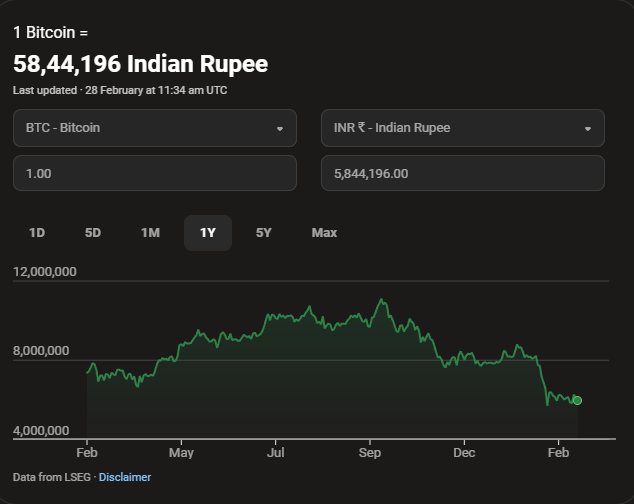
As of February 28, 2026, Bitcoin (BTC) is trading near $63,000 USD, with price feeds reporting:

  • $63,191 (down 6.35% in 24 hours)
  • $63,562 (down 2.05% intraday)

The total market capitalization fluctuates between $1.27 trillion and $1.31 trillion, while 24-hour trading volumes exceed $36–$42 billion, signaling intense activity and volatility.

Bitcoin


Bitcoin has experienced sharp swings in late February:

  • Dropped below $63,000 on February 23 amid tariff tensions and geopolitical uncertainty.
  • Touched intraday lows near $62,964 before partial recovery.
  • Previously rebounded toward $68,000 on ETF inflows.
  • Earlier peaked above $80,000 in early February before erasing nearly $200B in market value within a week.
  • 7-day declines reached up to 12%.

Recent 24-hour price ranges fluctuated between $63,509 and $68,021, highlighting persistent volatility.

🌍 Key Influences Driving Bitcoin

Several macro and structural factors are shaping BTC’s price action:

  • US Tariffs & Policy Moves: Trade tensions triggered broad risk-off sentiment.
  • Strong US Jobs Data: Reduced expectations for rate cuts.
  • Mass Liquidations: Over $2.56B wiped out in a single day.
  • ETF Inflows: Provided short-term support and institutional demand.
  • Altcoin Recovery: Ethereum and major altcoins saw temporary rebounds.

🔮 Analyst Forecasts for 2026

Market forecasts remain divided:

  • Standard Chartered revised its 2026 Bitcoin target to $100,000 (down from $150,000).
  • Some analysts warn of a potential dip toward $50,000 before recovery.
  • Short-term consolidation expected between $67,500–$70,000.
  • Prediction markets suggest $58,000+ as a potential late-February floor.

📊 Broader Market Context

Bitcoin’s fundamentals remain strong despite turbulence:

  • Circulating supply: Nearly 20 million BTC out of 21 million max.
  • Treasury holdings: Approximately 1.17 million BTC.
  • Yearly decline: Around 22% from peaks above $119,000.

Volatility continues amid bond yield shifts, inflation data anticipation, and broader macroeconomic signals. Institutional ETF demand provides underlying resilience despite market stress.

📈 Investor Outlook: Crash or Opportunity?

With Bitcoin hovering near $63K, investors face a pivotal moment. If support levels fail, deeper corrections could emerge. However, strong institutional participation and supply constraints suggest potential upside once macro pressures ease.


Bitcoin remains in a high-volatility zone. Smart investors are closely watching inflation data, Federal Reserve signals, and ETF flows before making decisive moves.


Stay Updated. Stay Strategic. The Crypto Market Never Sleeps.

Read more