Two continents. One mega deal. A global trade reset.
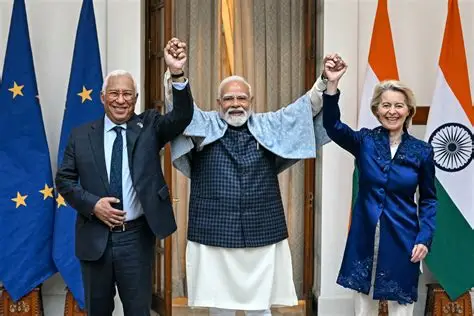
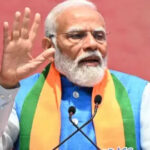
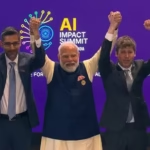
In a historic move reshaping global commerce, India and the European Union have finalized a landmark Free Trade Agreement (FTA) on January 27, 2026. Dubbed the “mother of all deals” by Prime Minister Narendra Modi and European Commission President Ursula von der Leyen, this pact creates a free trade zone covering 2 billion people and nearly 25% of global GDP.
Negotiated over nearly two decades, talks gained momentum amid escalating U.S. tariff pressures under President Donald Trump. Recent U.S. actions—such as 50% tariffs on Indian goods linked to Russian oil purchases and threats against EU exports—pushed both India and the EU to fast-track diversification away from U.S. and China dependency.
The EU’s recent trade pact with Mercosur nations further signals a broader strategy to future-proof its global trade footprint.
Key Tariff Changes
EU to eliminate tariffs on 99.5% of Indian goods over 7 years
India cuts car import duties from 110% to 10% within 5 years
Wine & spirits tariffs slashed from 150% to 20–30%
Olive oil duty reduced from 40% to zero
Near-total tariff removal on machinery, chemicals, and pharmaceuticals
How India Benefits
The agreement is a major win for Indian exporters. Sectors expected to see a sharp rise include:
Textiles and apparel
Engineering goods
Leather, footwear, and handicrafts
Gems and jewelry
Marine and seafood products
Economists estimate India could save up to $474 billion annually in duties, helping offset U.S. tariffs, attract European investment, and reduce reliance on Chinese imports.
How the EU Benefits
For Europe, the deal unlocks deeper access to India’s fast-growing consumer market, including the world’s third-largest car market.
German automakers like Volkswagen gain cost advantage
French and Italian wine producers expand reach
Spanish olive oil exports surge
The FTA also acts as a hedge against geopolitical unpredictability, including Trump-era trade volatility and strategic disputes.