“Power, Protest & Firepower — A Region at a Tipping Point.”
February 28, 2026 marked a dramatic escalation in Middle East tensions as the United States and Israel launched coordinated military strikes on Iran under Operation Roaring Lion. The action followed months of internal unrest in Iran, failed diplomacy, and rising military deployments across the Gulf.
Iran’s anti-regime protests began in late 2025, fueled by economic collapse, inflation, and political repression. The unrest became the largest nationwide uprising since 1979.
The government, led by Supreme Leader Ali Khamenei, responded with a severe crackdown. Reports estimate 30,000–43,000 deaths and over 26,000 arrests, with enforcement led by the Islamic Revolutionary Guard Corps (IRGC) and Basij forces using live ammunition and drone surveillance.
US President Donald Trump publicly voiced support for protesters while deploying aircraft carriers USS Abraham Lincoln and USS Gerald R. Ford to the region.
Washington demanded Iran:
End uranium enrichment activities
Limit ballistic missile programs
Cease support for proxy groups such as Hezbollah and the Houthis
Failed Diplomacy & Rising Deadlines
Indirect talks between the US and Iran were held in Muscat (February 6) and Geneva (February 17). However, negotiations stalled over nuclear concessions and missile restrictions.
On February 20, President Trump issued a 10–15 day ultimatum, warning of military action if no breakthrough occurred. By February 27, diplomacy collapsed amid escalating unrest inside Iran and intensified US military positioning — the largest regional buildup since 2003.
Operation Roaring Lion: The Strikes
On February 28, coordinated US and Israeli forces launched precision strikes targeting:
Missile production facilities
Nuclear development sites
Military command structures
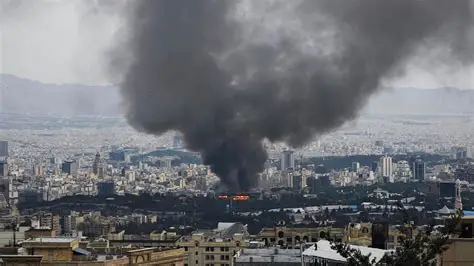
Explosions were reported in Tehran and other strategic cities. Iranian leadership was reportedly moved to secured locations as airspace was closed nationwide.
President Trump framed the operation as a move to neutralize threats and protect US interests, urging Iranian forces to surrender while calling it “the hour of freedom.”
Iran’s Retaliation & Regional Escalation
Iran responded swiftly with missile barrages targeting Israel and US bases across Kuwait, UAE, Qatar, and Bahrain. Sirens were triggered in multiple locations, and explosions were reported across Gulf states.
Tehran warned of potential attacks on US carriers and threatened to disrupt shipping routes, including the strategically critical Strait of Hormuz.
Regional militias, including Kata’ib Hezbollah, warned of broader confrontation, raising fears of a wider conflict.
Global Reactions & Strategic Risks
International reactions were immediate:
The European Union urged de-escalation and increased pressure on Iranian military structures.
Qatar warned of a regional catastrophe if the conflict spreads.
Israeli Prime Minister Benjamin Netanyahu described the strikes as preemptive action against existential threats.
Markets reacted nervously, with oil prices and safe-haven assets rising amid concerns of prolonged instability.
What Happens Next?
The conflict remains fluid. Analysts warn of several high-risk scenarios:
Blockade or disruption of the Strait of Hormuz
Expanded proxy warfare across Iraq, Lebanon, Syria, and Yemen
Cyberattacks targeting energy and financial systems
Direct confrontation between major regional powers
With military operations ongoing, the coming days may determine whether the crisis stabilizes or escalates into a broader Middle East war.