
Israel–Iran War Explodes

Israel

Middle East on the Brink: Power, Precision & a Region Redefined


Conflict Overview

Israel is currently at the center of a rapidly expanding regional conflict following coordinated military operations with the United States targeting Iranian military and nuclear infrastructure. The confrontation intensified dramatically after large-scale airstrikes struck multiple strategic locations inside Iran. Iranian state media have confirmed the death of Supreme Leader Ali Khamenei, describing it as a historic and destabilizing moment for the country’s leadership.

War with Iran & Casualties

The military campaign, reportedly named “Lion’s Roar” by Israeli Prime Minister Benjamin Netanyahu, is being framed as an effort to eliminate what Israel considers an existential threat. Iranian sources report more than 500 casualties following joint U.S.–Israeli strikes, with significant civilian losses claimed in affected areas.

In response, Iran has launched missile and drone barrages toward Israeli cities, resulting in fatalities and injuries. Reports indicate impacts in locations including Beit Shemesh and Jerusalem. U.S. officials have also acknowledged casualties among American personnel stationed at regional bases targeted during retaliatory strikes.

Regional Escalation & Hezbollah

The conflict has widened beyond Israel and Iran. Israeli airstrikes have reportedly hit southern Lebanon and Beirut after Hezbollah launched rockets toward Israeli military sites. Casualties have been reported in Lebanon, and Hezbollah has pledged continued retaliation.

Several neighboring states hosting U.S. military installations have expressed concern about being drawn deeper into the conflict, increasing fears of a broader Middle East war involving multiple actors.

Domestic & Diplomatic Situation in Israel

Inside Israel, air-raid sirens have repeatedly sounded across central and northern regions amid continued missile attacks. The Israeli government maintains that its operations are directed at Iran’s leadership and military capabilities rather than civilians.

Prime Minister Netanyahu has described the campaign as intended to be “quick and decisive.” U.S. leadership has signaled strong support for the operation. Meanwhile, Israel is preparing for the gradual reopening of airspace after temporary closures disrupted international travel.

AI, Intelligence & Modern Warfare

Reports suggest that advanced intelligence-gathering tools, including AI-enhanced surveillance systems, played a key role in planning the strikes. Analysts highlight that modern warfare increasingly relies on digital reconnaissance, cyber-operations, and precision targeting.

Experts warn that while technological superiority offers strategic advantages, it also raises the stakes in a multi-front conflict where escalation risks remain high.

What Comes Next?

With regional tensions escalating and global powers watching closely, the trajectory of this conflict remains uncertain. Diplomatic channels face mounting pressure as military actions continue. Observers caution that further retaliation or expansion could reshape the geopolitical landscape of the Middle East for years to come.
 

Read more

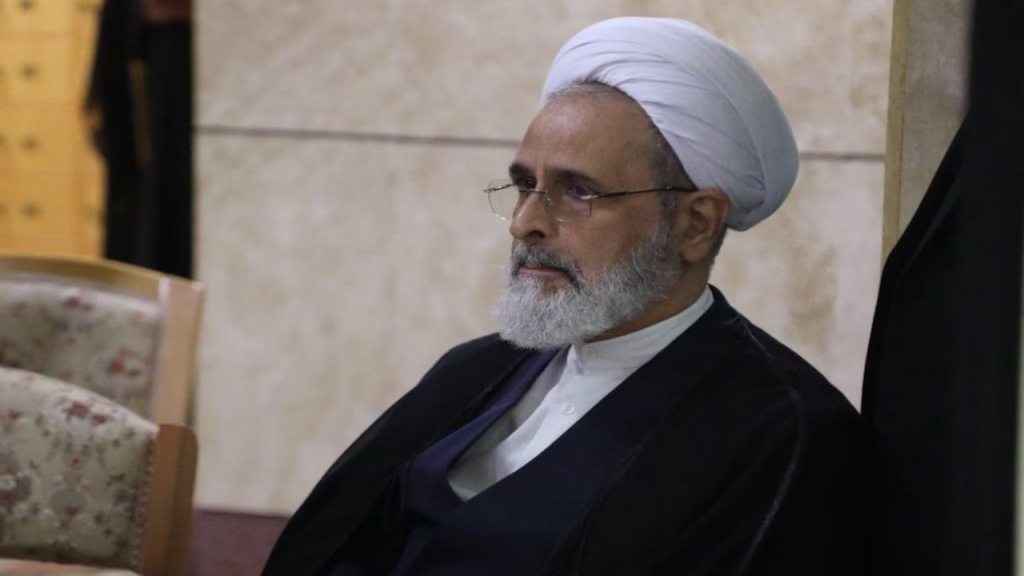
Iran Leadership Crisis: Arafi Steps Into Power After Khamenei’s Deat

Arafi

“From Turbulence to Transition — Who Will Lead Iran Next?”

1️⃣ Emergency Leadership Council Formed

Following the reported killing of Iran’s Supreme Leader Ali Khamenei in a US-Israeli strike on February 28, 2026, Iran’s Expediency Discernment Council swiftly appointed Ayatollah Alireza Arafi as the jurist member of a temporary three-person Leadership Council.

He now serves alongside President Masoud Pezeshkian and judiciary chief Gholam-Hossein Mohseni-Ejei. Under Iran’s constitution, this council assumes supreme leadership duties until the Assembly of Experts selects a permanent successor.

2️⃣ Who Is Ayatollah Alireza Arafi?

Born in 1959 in Maybod, Yazd province, Arafi comes from a prominent clerical family. His father was closely associated with Ayatollah Ruhollah Khomeini, founder of the Islamic Republic.

Arafi currently:

  • Heads Iran’s nationwide seminary system
  • Sits on the powerful Guardian Council
  • Serves within the Assembly of Experts

Multilingual in Arabic and English, he is considered technologically aware, even advocating for AI tools to expand Shia ideological outreach.

3️⃣ Regional War and Escalating Tensions

The strike that reportedly killed Khamenei triggered immediate retaliation threats. Iran’s Revolutionary Guard pledged its “most intense offensive” against US and Israeli targets.

Airspace disruptions followed:

  • Emirates and Qatar suspended flights
  • Israeli airspace temporarily closed
  • Travelers stranded amid counterattacks

The conflict rapidly expanded into a broader regional confrontation, intensifying global energy and security concerns.

4️⃣ Arafi’s Role, Power & Influence

Though not traditionally viewed as a security hardliner, Arafi has held critical institutional roles trusted by Khamenei. His administrative control over religious seminaries strengthens ideological continuity during the transition.

From 2009–2018, he led Al-Mustafa International University, claiming tens of millions of global Shia conversions — figures widely debated by analysts.

In 2022, he also met Pope Francis in a rare interfaith engagement, signaling diplomatic outreach capabilities beyond domestic politics.

5️⃣ Controversies and Sanctions

During the 2022 Mahsa Amini protests, Arafi warned that attacks on clergy would be met harshly, stating: “The turban will become their shroud.”

Canada later sanctioned him for alleged roles in supporting crackdowns. His Guardian Council position and seminary leadership tie him firmly to Iran’s ideological structure.

6️⃣ What Happens Next?

The Assembly of Experts now faces mounting pressure to appoint a permanent successor. Arafi’s placement on the temporary council positions him as a key influencer — though whether he emerges as a permanent contender remains uncertain.

Global markets are closely watching:

  • Potential closure risks in the Strait of Hormuz
  • Scale of Iranian retaliation
  • Long-term regional stability

As of March 1, 2026, Arafi’s appointment signals institutional continuity amid crisis — but Iran’s long-term leadership trajectory remains unresolved.


Stay tuned as the Middle East enters one of its most defining political transitions in decades.


Read more