"When the Moon Turns Red, the World Looks Up."
A breathtaking Total Lunar Eclipse, popularly known as the “Blood Moon,” will captivate skywatchers on March 3, 2026. This marks the first lunar eclipse of 2026 and the last total lunar eclipse visible globally until New Year’s Eve 2028–2029. With nearly 41% of Earth’s population able to witness totality, this celestial event promises a safe and unforgettable show.
📌 Table of Contents
- Event Timeline (UTC)
- Where Will It Be Visible?
- Key Astronomical Facts
- Eclipse Phase Breakdown
- Why This Eclipse Is Special
- How to Watch Safely
⏳ Event Timeline (UTC)
The eclipse unfolds gradually over 5 hours and 39 minutes, transitioning through penumbral, partial, and total phases.
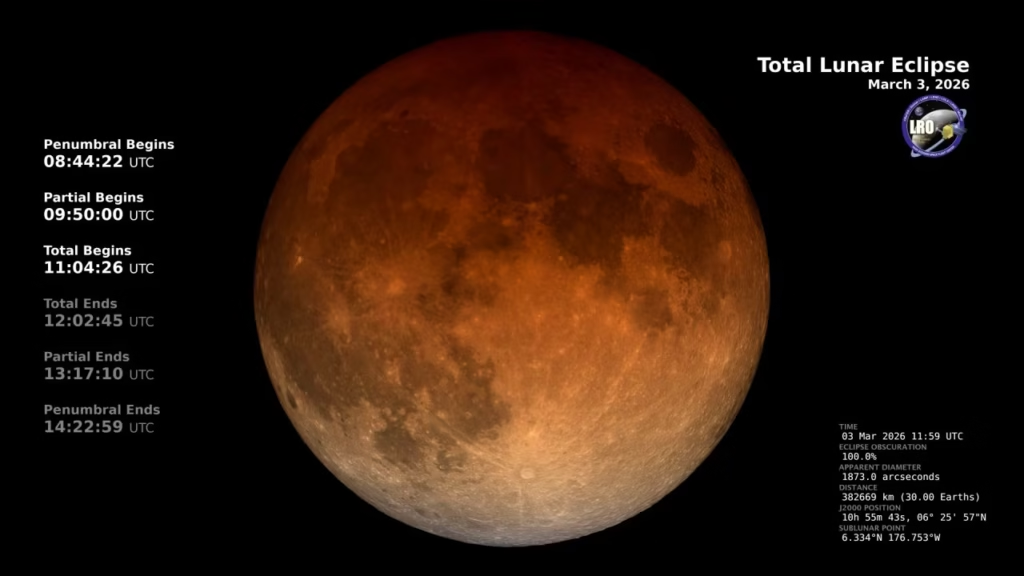
- 08:44 UTC – Penumbral Eclipse Begins
- 09:50 UTC – Partial Eclipse Begins
- 11:04 UTC – Totality Begins
- 11:34 UTC – Maximum Eclipse (Peak Red Glow)
- 14:23 UTC – Eclipse Ends
During totality, the Moon will glow a dramatic reddish hue as sunlight bends through Earth’s atmosphere — the reason behind the iconic “Blood Moon” effect.
🌍 Where Will It Be Visible?
Prime viewing regions include:
- Americas – Early morning hours
- Eastern Asia – Evening to night
- Australia – Night sky spectacle
- Pacific Region – Excellent viewing conditions
In North America (e.g., New York), penumbral and partial phases will be visible before dawn, though totality may occur below the horizon. Europe and Africa will unfortunately miss this event.
🌎 Approximately 3.34 billion people (41% of Earth’s population) will witness at least some totality.
🔭 Key Astronomical Facts
- Umbral Magnitude: 1.1526 (Full 100% Moon coverage)
- Saros Series: 133 (27th eclipse of 71)
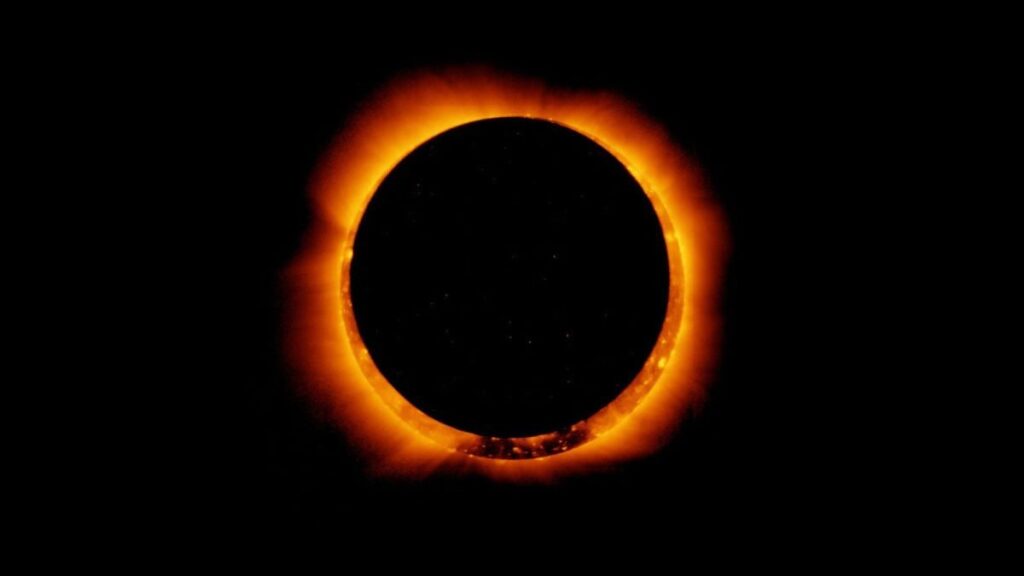
- Follows: Annular Solar Eclipse on Feb 17, 2026
- Constellation: Leo
- Orbital Position: Post-perigee
- Rare Event: Occultation of galaxy NGC 3423 over North America during totality
The brief overlap with deep-sky object NGC 3423 makes this eclipse particularly rare for astronomers.
📊 Eclipse Phase Breakdown
| Phase | Duration | Global Peak |
|---|---|---|
| Totality | 58 minutes | 11:34 UTC |
| Partial | 2 hours 29 minutes | N/A |
| Penumbral | 2 hours 12 minutes | N/A |
✨ Why This Eclipse Is Special
This Blood Moon is the third in a near-tetrad sequence following total lunar eclipses on March 14 and September 8, 2025. Interestingly, it coincides with China’s Lantern Festival — the first time since 2017 this cultural event aligns with a total lunar eclipse.
With its rare astronomical alignments and long global gap until the next widely visible total eclipse, March 3, 2026 becomes a must-watch event.
👀 How to Watch Safely
- ✅ No special glasses required (unlike solar eclipses)
- ✅ Completely safe for naked-eye viewing
- 🔭 Binoculars or telescopes enhance red tones and lunar detail
- 🌤️ Check local weather forecasts for clear skies
Weather models currently suggest favorable conditions across much of the Pacific region.
🌌 Final Word
The March 3, 2026 Blood Moon promises a spectacular, safe celestial show connecting continents under one glowing red sky. Mark your calendar, set your alarms, and prepare to witness one of the most dramatic lunar displays until 2028.