
Sky on Fire: Gulf Tensions Reach a Breaking Point
📌 Table of Contents
F-15E Crash in Kuwait
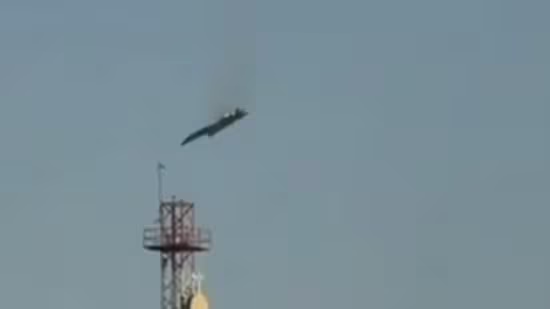
In early March 2026, a U.S. Air Force F-15E Strike Eagle crashed over Kuwait during a period of escalating tensions between the United States and Iran. The incident occurred as allied forces conducted retaliatory operations against Iranian-linked targets across the region.
Iranian state media circulated footage allegedly showing the aircraft spiraling before breaking apart mid-air. Reports indicate that both the pilot and weapons-systems officer successfully ejected. However, unconfirmed sources suggest they were later detained by local forces or armed groups, instantly turning the crash into a geopolitical flashpoint.
The crash has intensified diplomatic friction in the Gulf, raising concerns over direct confrontation and broader regional instability.
Rapid Middle-East Deployment
Even before the crash, the Pentagon had been accelerating the deployment of additional F-15E Strike Eagles to the Middle East. Approximately two dozen aircraft from the 494th Fighter Squadron based at RAF Lakenheath in the United Kingdom were repositioned to bolster U.S. airpower.
Supported by KC-135 aerial refueling tankers, the aircraft were tasked with strike and air-superiority missions amid rising threat levels. The move signaled Washington’s readiness to project force quickly while maintaining air dominance.
Despite the increasing integration of fifth-generation fighters like the F-35, the F-15 continues to play a crucial role in high-intensity combat scenarios due to its payload capacity, combat record, and adaptability.
Fleet Modernization & F-15EX Expansion
Beyond the immediate crisis, the U.S. Air Force is extending the service life of older F-15C/D Eagle variants. A limited group under the “Platinum Eagle” initiative is expected to remain operational through approximately 2030, primarily for homeland defense and airspace control missions.
Meanwhile, the F-15EX “Eagle II” program is expanding significantly. Originally planned as a 98-aircraft purchase, the fleet is now set to grow to 129 jets under updated defense budget allocations. The F-15EX features advanced radar, upgraded avionics, improved survivability, and expanded weapons capacity.
This dual strategy—extending legacy platforms while ramping up next-generation upgrades—ensures the F-15 family remains a backbone of U.S. and allied air forces well into the 2030s.
Why the F-15 Still Matters
More than four decades after its debut, the F-15 remains central to U.S. airpower strategy. Its combination of range, payload, and combat-proven performance makes it indispensable in volatile regions like the Middle East.
The Kuwait crash underscores not only the risks of modern aerial warfare but also the enduring reliance on fourth-generation fighters in an increasingly complex security landscape.
The March 2026 F-15 crash has amplified Gulf tensions at a critical moment. With rapid deployments and fleet upgrades underway, the F-15’s role in shaping regional security remains stronger—and more scrutinized—than ever.