
Israel–Iran War Explodes: Missiles, Drones & Global Shockwaves

Israel–Iran

From Shadow War to Open Fire — The Middle East on Edge!

📌 Table of Contents


💥 Latest Military Strikes

The Israel–Iran conflict has surged into a full-scale confrontation in late March 2026.
Iran launched a massive barrage of ballistic missiles and drones targeting Israel after a reported strike on its Natanz nuclear facility.

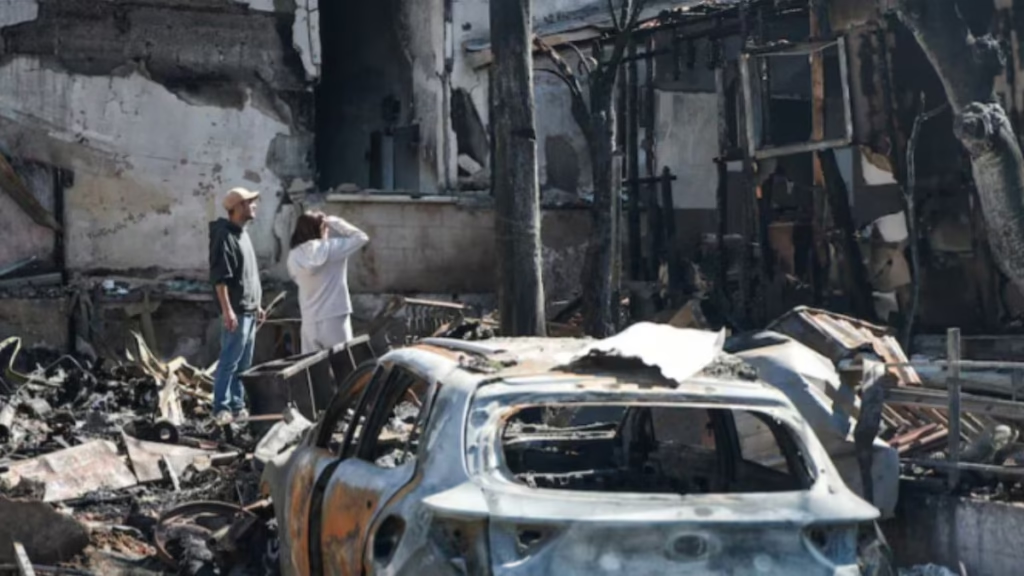
Southern Israeli regions, including key towns, were hit, leaving over 100 injured and causing major infrastructure damage. Sensitive strategic areas also faced impact, raising global concern.

In response, Israel and the United States carried out coordinated airstrikes across Iran, targeting military bases, missile systems, and nuclear-linked facilities. Thousands of sites were reportedly hit, though damage claims remain disputed.

🌍 Regional & Global Impact

  • Conflict spreading across the Middle East with allied groups joining in.
  • Missile and drone attacks reported near U.S. bases in Gulf nations.
  • Threats to key shipping routes like the Red Sea and Bab el-Mandeb.
  • Oil prices and global trade facing major disruption risks.

The Strait of Hormuz remains highly volatile, with shipping disruptions and rising insurance costs impacting global supply chains.
Major global powers have urged de-escalation, but diplomatic progress remains limited.

🚨 Situation on the Ground

Israel is on high alert with air-raid sirens, evacuations, and strict security measures. Schools and public spaces remain affected in several regions.

In Iran, daily life has also been disrupted by strikes, outages, and military mobilization. Officials continue to signal resistance and readiness for prolonged conflict.

⚡ Quick Summary

The crisis has transformed into a direct high-intensity war between Israel and Iran, involving advanced weapons and global stakes.
With rising casualties and infrastructure damage, the risk of a broader regional conflict — and economic shock — remains extremely high.
Read more

Pakistan Airstrike in Kabul Sparks Global Outrage

Pakistan Airstrike

"A Night of Fire in Kabul — The Strike That Shook the Region."

An alleged Pakistan airstrike on a drug rehabilitation hospital in Kabul has triggered international condemnation and rising tensions between Pakistan and Afghanistan. The incident has left hundreds dead and injured, raising fears of retaliation and regional instability.

Table of Contents


Incident Overview

A deadly airstrike in Kabul has sharply escalated tensions between Pakistan and Afghanistan. The attack reportedly took place around 9 p.m. on March 16, 2026, targeting a large rehabilitation hospital. Early reports indicate that at least 400 people were killed and more than 250 were injured, making it one of the deadliest incidents in the region in recent years.

The strike has drawn widespread condemnation internationally, while Afghanistan’s Taliban government has threatened retaliation. Rescue operations continued through the night as families searched for missing relatives.

Details of the Strike

The strike reportedly hit the Omar Addiction Treatment Hospital, also known as the Omid Hospital, located in Kabul’s Police District 9. The facility was said to have a capacity of nearly 2,000 beds and served patients undergoing treatment for drug addiction.

Taliban spokesperson Zabihullah Mujahid condemned the attack and described it as a “crime against humanity,” stating that the entire hospital complex was destroyed in the explosion.

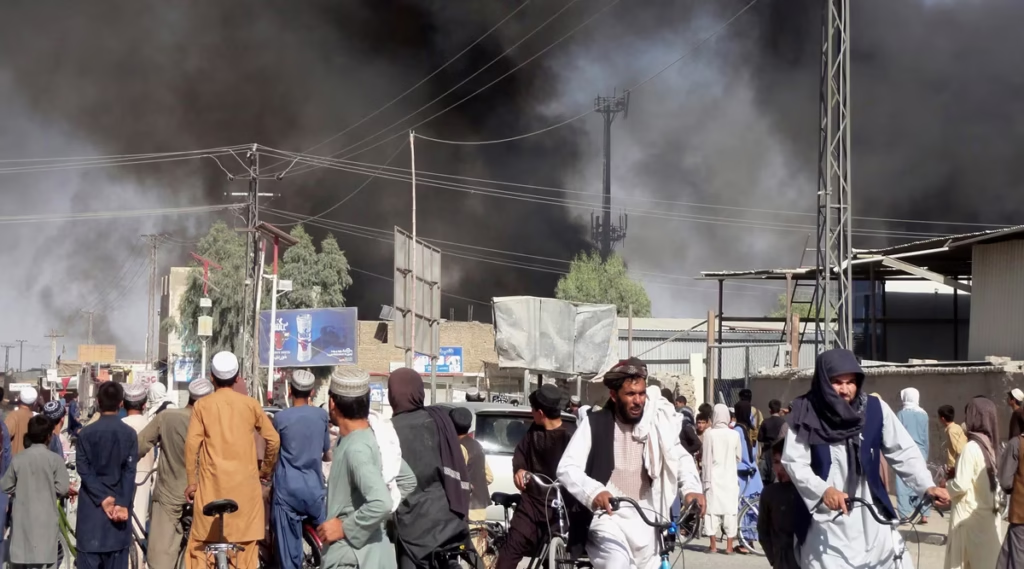
Videos circulating online showed the building engulfed in flames while emergency responders carried victims away on stretchers. Witnesses reported hearing multiple secondary explosions during rescue efforts.

Conflicting Claims

Pakistan has denied targeting a civilian hospital. Officials claim the airstrike was aimed at Taliban military installations in Kabul and Nangarhar provinces. According to their statements, visible secondary detonations suggest ammunition storage facilities were hit.

However, Afghan authorities and Taliban officials maintain that the strike deliberately targeted a civilian medical facility treating recovering drug users, including minors.

The disagreement over the target has intensified diplomatic tensions and raised concerns about misinformation during the conflict.

International Reactions

Several countries have reacted strongly to the incident. India described the strike as “barbaric and cowardly,” accusing Pakistan of disguising a civilian attack as a military operation.

China urged both countries to remain calm and avoid further escalation, emphasizing the need for diplomatic dialogue.

Taliban spokesperson Suhail Shaheen warned that Afghanistan would “respond in their language,” signaling the possibility of retaliatory action.

Broader Context

The incident occurs amid long-standing tensions along the 2,600-kilometer Durand Line border. Pakistan has repeatedly accused Afghanistan of sheltering militant groups responsible for cross-border attacks.

Recent clashes between Taliban fighters and Pakistani forces have increased the risk of a wider conflict. Analysts suggest the strike represents a significant escalation, as it reportedly targeted infrastructure within Kabul itself.

As of March 17, 2026, no additional strikes have been confirmed, but experts warn that the situation remains volatile and could threaten regional stability.


Read more

Bahrain Under Missile Fire: Gulf Tensions Explode After US Base Targeted

Bahrain

“Rising Tensions, Regional Shockwaves: The Gulf Faces a Critical Moment.”


Late February 2026
has brought dramatic developments in the Gulf region as Bahrain confirmed missile attacks on its territory, marking a sharp escalation in regional tensions linked to ongoing US-Israel strikes on Iran.

📌 Table of Contents

  1. Missile Attack on US Base in Bahrain
  2. Regional Escalation and Wider Gulf Impact
  3. Government and Security Response
  4. Global Implications and Energy Concerns

Missile Attack on US Base in Bahrain

Bahrain’s National Communication Center confirmed missile strikes targeting sites within its borders, specifically the US Navy’s 5th Fleet headquarters in the Juffair area. The base plays a crucial role in overseeing naval operations across the Gulf.

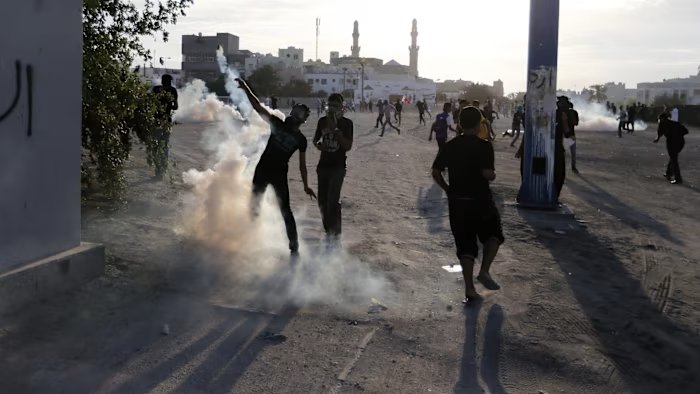
Explosions were reported near the naval facility, with smoke rising from the area. Authorities described the strikes as a violation of Bahrain’s sovereignty. Air defense systems were activated immediately, and sirens echoed across the island nation.

Emergency response plans were implemented swiftly. As of now, no immediate casualties have been officially reported.

Regional Escalation and Wider Gulf Impact

The attack comes amid heightened tensions following joint US-Israel military operations against Iran under the operation titled “Lion’s Roar.” Iran has vowed retaliation across the Gulf, escalating fears of broader regional instability.

Similar security incidents have been reported across neighboring countries:

  • A missile interception over Qatar’s Al Udeid Air Base
  • Explosions reported in parts of the UAE and Abu Dhabi
  • Heightened alert levels in Kuwait and Jordan

Gulf states imposed temporary flight restrictions, while authorities urged residents to remain indoors and avoid non-essential travel. Regional airspaces experienced disruptions, increasing global anxiety.

Government and Security Response

Bahrain’s Interior Ministry issued public alerts condemning the “hostile attacks” as threats to national security. Security forces intensified ground measures while continuing surveillance operations.

As a key US ally in the region, Bahrain hosts critical military infrastructure, making it strategically significant in the unfolding crisis. Officials have not yet released detailed assessments of potential damage.

Global Implications and Energy Concerns

The latest escalation raises concerns about broader regional conflict. Observers warn that continued spillover could disrupt global trade routes and energy supplies, particularly oil shipments through key Gulf waterways.

Iran’s foreign ministry has pledged a “decisive response,” amplifying fears of further confrontation. Bahrain’s strategic role in regional defense structures makes the situation closely watched by global markets and policymakers.

Before the crisis, Bahrain had been focusing on domestic development initiatives, including social programs and infrastructure improvements. However, defense and security have now taken priority amid mounting regional uncertainty.


As the Gulf navigates one of its most tense periods in recent years, global attention remains fixed on whether diplomacy can prevent further escalation.


Read more