
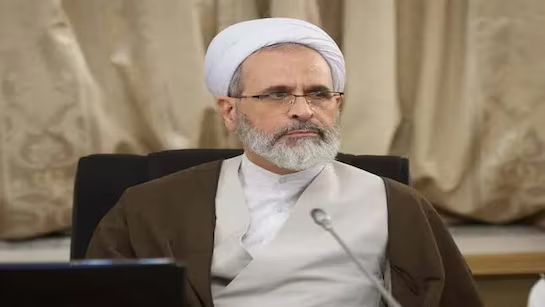
Ayatollah Alireza Arafi Alive: Truth Behind Viral Death Rumors

Ayatollah

Facts Over Fear — Separating Rumors from Reality in the Iran Crisis


March 2, 2026: Viral claims alleging the death of Ayatollah Alireza Arafi in Israeli airstrikes have been widely circulated online. However, verified reports confirm that Arafi is alive and actively participating in Iran’s leadership transition.

Origin of the Death Rumors

Unconfirmed claims began circulating between March 1–2, 2026, alleging that Ayatollah Alireza Arafi was killed during a new wave of Israeli airstrikes targeting Iranian command centers.

The rumors appear to have originated from Israeli media sources and were amplified on social platforms, including posts by former US National Security Advisor Mike Flynn. Despite the widespread circulation, no Iranian state media, international news agencies, or verified intelligence sources have confirmed these claims.

Fact Check: There is currently no credible evidence supporting reports of Arafi’s death.

Context of His Appointment

Ayatollah Arafi was appointed on February 28, 2026, as the jurist member of Iran’s three-person interim leadership council.

The council includes:

  • President Masoud Pezeshkian
  • Chief Justice Gholamhossein Mohseni-Ejei
  • Ayatollah Alireza Arafi

This interim body was formed following the confirmed killing of Supreme Leader Ayatollah Ali Khamenei in coordinated US-Israeli airstrikes on Tehran.

The council is responsible for carrying out supreme leadership duties until the Assembly of Experts selects a permanent successor.

Iran declared 40 days of national mourning and reported over 200 deaths and 700 injuries from the strikes.

Who Is Ayatollah Alireza Arafi?

Born in 1959 in Meybod, Ayatollah Arafi is considered a senior clerical figure closely aligned with Iran’s previous leadership.

Key roles include:

  • Friday prayer leader in Qom
  • Chairman of Al-Mustafa International University
  • Appointed to the Guardian Council in 2019

Through the Guardian Council, he has played a role in vetting legislation and political candidates, positioning him as an influential figure within Iran’s governance structure.

Broader Iran-Israel Conflict Escalation

The regional situation remains volatile following the reported deaths of several high-ranking officials, including Iran’s army chief and defense minister.

Iranian leadership has labeled the strikes as an act of war, while US political figures have issued strong statements condemning Iranian leadership.

Military exchanges between Iran and Israel have reportedly continued in the aftermath, increasing global tensions and uncertainty across the Middle East.

Final Fact-Check Verdict

As of March 2, 2026, Ayatollah Alireza Arafi remains alive. Claims of his death stem from unverified sources and have not been substantiated by credible international or Iranian media outlets.

Treat viral reports with caution. Always rely on verified sources during times of geopolitical crisis.
Read more

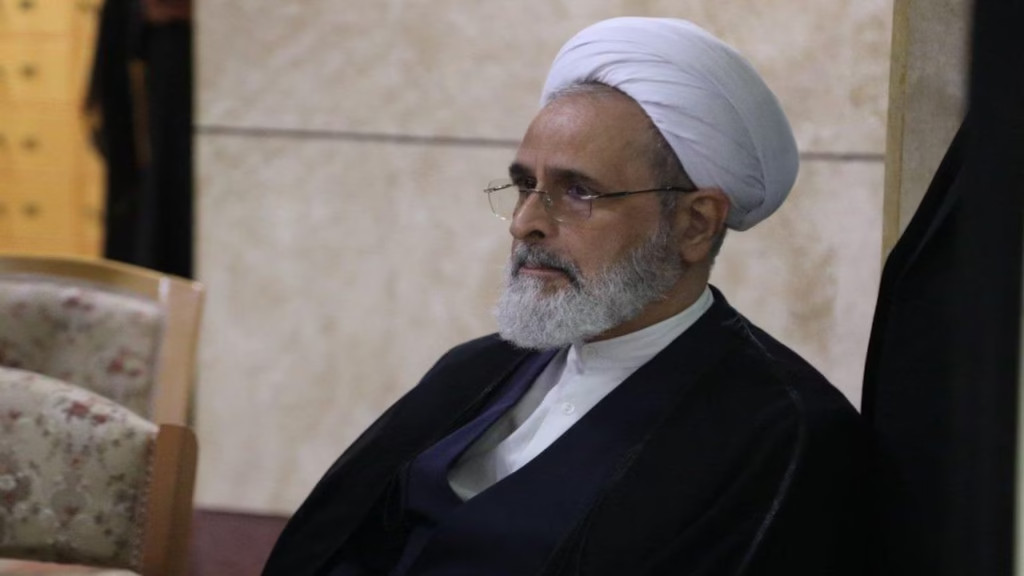
Iran Leadership Crisis: Arafi Steps Into Power After Khamenei’s Deat

Arafi

“From Turbulence to Transition — Who Will Lead Iran Next?”

1️⃣ Emergency Leadership Council Formed

Following the reported killing of Iran’s Supreme Leader Ali Khamenei in a US-Israeli strike on February 28, 2026, Iran’s Expediency Discernment Council swiftly appointed Ayatollah Alireza Arafi as the jurist member of a temporary three-person Leadership Council.

He now serves alongside President Masoud Pezeshkian and judiciary chief Gholam-Hossein Mohseni-Ejei. Under Iran’s constitution, this council assumes supreme leadership duties until the Assembly of Experts selects a permanent successor.

2️⃣ Who Is Ayatollah Alireza Arafi?

Born in 1959 in Maybod, Yazd province, Arafi comes from a prominent clerical family. His father was closely associated with Ayatollah Ruhollah Khomeini, founder of the Islamic Republic.

Arafi currently:

  • Heads Iran’s nationwide seminary system
  • Sits on the powerful Guardian Council
  • Serves within the Assembly of Experts

Multilingual in Arabic and English, he is considered technologically aware, even advocating for AI tools to expand Shia ideological outreach.

3️⃣ Regional War and Escalating Tensions

The strike that reportedly killed Khamenei triggered immediate retaliation threats. Iran’s Revolutionary Guard pledged its “most intense offensive” against US and Israeli targets.

Airspace disruptions followed:

  • Emirates and Qatar suspended flights
  • Israeli airspace temporarily closed
  • Travelers stranded amid counterattacks

The conflict rapidly expanded into a broader regional confrontation, intensifying global energy and security concerns.

4️⃣ Arafi’s Role, Power & Influence

Though not traditionally viewed as a security hardliner, Arafi has held critical institutional roles trusted by Khamenei. His administrative control over religious seminaries strengthens ideological continuity during the transition.

From 2009–2018, he led Al-Mustafa International University, claiming tens of millions of global Shia conversions — figures widely debated by analysts.

In 2022, he also met Pope Francis in a rare interfaith engagement, signaling diplomatic outreach capabilities beyond domestic politics.

5️⃣ Controversies and Sanctions

During the 2022 Mahsa Amini protests, Arafi warned that attacks on clergy would be met harshly, stating: “The turban will become their shroud.”

Canada later sanctioned him for alleged roles in supporting crackdowns. His Guardian Council position and seminary leadership tie him firmly to Iran’s ideological structure.

6️⃣ What Happens Next?

The Assembly of Experts now faces mounting pressure to appoint a permanent successor. Arafi’s placement on the temporary council positions him as a key influencer — though whether he emerges as a permanent contender remains uncertain.

Global markets are closely watching:

  • Potential closure risks in the Strait of Hormuz
  • Scale of Iranian retaliation
  • Long-term regional stability

As of March 1, 2026, Arafi’s appointment signals institutional continuity amid crisis — but Iran’s long-term leadership trajectory remains unresolved.


Stay tuned as the Middle East enters one of its most defining political transitions in decades.


Read more