

Israel–Iran War Explodes: Missiles, Drones & Global Shockwaves

Israel–Iran

From Shadow War to Open Fire — The Middle East on Edge!

📌 Table of Contents


💥 Latest Military Strikes

The Israel–Iran conflict has surged into a full-scale confrontation in late March 2026.
Iran launched a massive barrage of ballistic missiles and drones targeting Israel after a reported strike on its Natanz nuclear facility.

Southern Israeli regions, including key towns, were hit, leaving over 100 injured and causing major infrastructure damage. Sensitive strategic areas also faced impact, raising global concern.

In response, Israel and the United States carried out coordinated airstrikes across Iran, targeting military bases, missile systems, and nuclear-linked facilities. Thousands of sites were reportedly hit, though damage claims remain disputed.

🌍 Regional & Global Impact

  • Conflict spreading across the Middle East with allied groups joining in.
  • Missile and drone attacks reported near U.S. bases in Gulf nations.
  • Threats to key shipping routes like the Red Sea and Bab el-Mandeb.
  • Oil prices and global trade facing major disruption risks.

The Strait of Hormuz remains highly volatile, with shipping disruptions and rising insurance costs impacting global supply chains.
Major global powers have urged de-escalation, but diplomatic progress remains limited.

🚨 Situation on the Ground

Israel is on high alert with air-raid sirens, evacuations, and strict security measures. Schools and public spaces remain affected in several regions.

In Iran, daily life has also been disrupted by strikes, outages, and military mobilization. Officials continue to signal resistance and readiness for prolonged conflict.

⚡ Quick Summary

The crisis has transformed into a direct high-intensity war between Israel and Iran, involving advanced weapons and global stakes.
With rising casualties and infrastructure damage, the risk of a broader regional conflict — and economic shock — remains extremely high.

Read more

Iran–UAE Conflict Escalates: Missiles, Drones and Rising Tensions in the Gulf

UAE

"Missiles in the Sky, Tension in the Gulf – A Region on Edge."

Table of Contents

Conflict Overview

Tensions between Iran and the United Arab Emirates (UAE) have sharply escalated following Israeli–US strikes on Iran in late February 2026. In response, Iran launched a large-scale retaliation targeting strategic sites across the UAE, including military bases, airports, and energy infrastructure.

Between February 28 and March 16, 2026, Iran reportedly launched more than 285 ballistic missiles, 1,567 drones, and 15 cruise missiles toward the UAE. Most were intercepted by advanced air defense systems, but several impacts and falling debris caused damage in civilian areas.

Key Attacks and Casualties

The first wave of strikes began on February 28, targeting US-linked facilities such as Al Dhafra Air Base near Abu Dhabi. While many projectiles were intercepted, debris fell near Zayed International Airport, killing one Pakistani civilian and injuring seven others.

By March 2, UAE air defenses reported intercepting:

  • 161 of 174 ballistic missiles
  • 645 of 689 drones
  • All 8 cruise missiles

Despite high interception rates, some attacks caused fires and structural damage in parts of Abu Dhabi and Dubai.

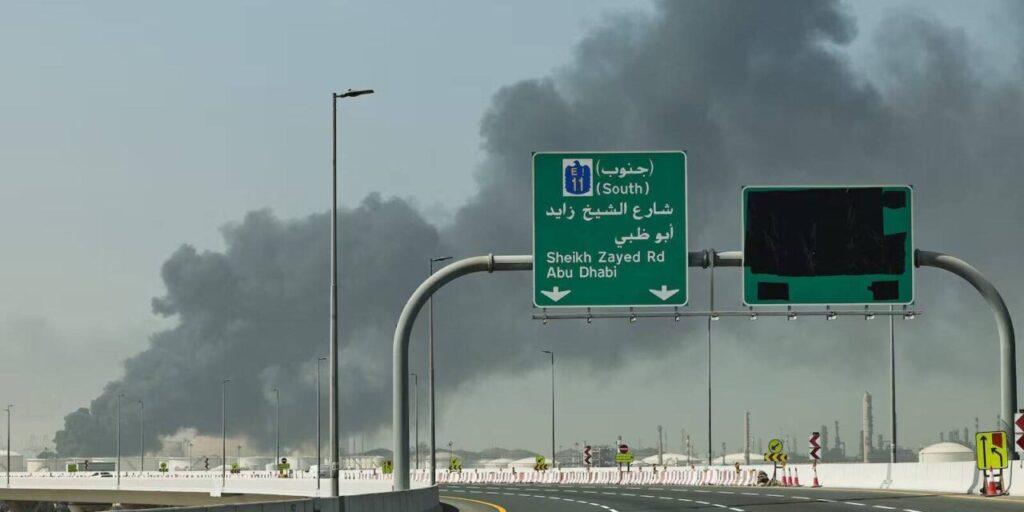
On March 16, a drone strike hit a fuel storage tank at Dubai International Airport, forcing flight suspensions and road closures. Air traffic was temporarily diverted to Al Maktoum International Airport. This marked the third reported incident affecting the airport since the conflict intensified.

Another missile strike reportedly killed a Palestinian resident in Al Bahyan, Abu Dhabi, while a drone attack triggered fires at the Fujairah Oil Industry Zone.

As of March 16, the conflict has resulted in approximately:

  • 6 deaths
  • 142 injuries
  • Damage to infrastructure and residential areas from intercepted debris

Economic Disruptions

The conflict has also created significant economic disruptions. The UAE temporarily shut down operations at its largest oil refinery in Ruwais after a drone attack occurred nearby. The refinery is considered one of the largest single-site refining complexes in the world.

With more than 1,800 projectiles reportedly directed toward the UAE since the escalation began, aviation routes, oil production, and logistics networks have experienced pressure. Airports have increased security measures, while energy facilities remain on high alert.

Diplomatic Fallout

Diplomatic tensions have intensified alongside military actions. The UAE announced the closure of its embassy in Tehran and withdrew diplomatic staff. Officials stated that any mediation or dialogue would require Iran to halt its attacks.

Iran, meanwhile, accused the UAE of supporting US strikes on Kharg Island and warned of potential risks around key ports such as Jebel Ali and Khalifa Port. UAE leadership has reiterated its commitment to national defense while urging international efforts to prevent further escalation.

Regional Context

The wider regional conflict has also affected other Gulf countries. Missile and drone activity has extended toward Saudi Arabia and Bahrain, although Gulf states remain cautious about deeper involvement in the broader US–Israel–Iran confrontation.

UAE air defense systems remain active as of mid-March, intercepting ongoing threats while authorities continue monitoring the evolving security situation across the Gulf.


Read more