
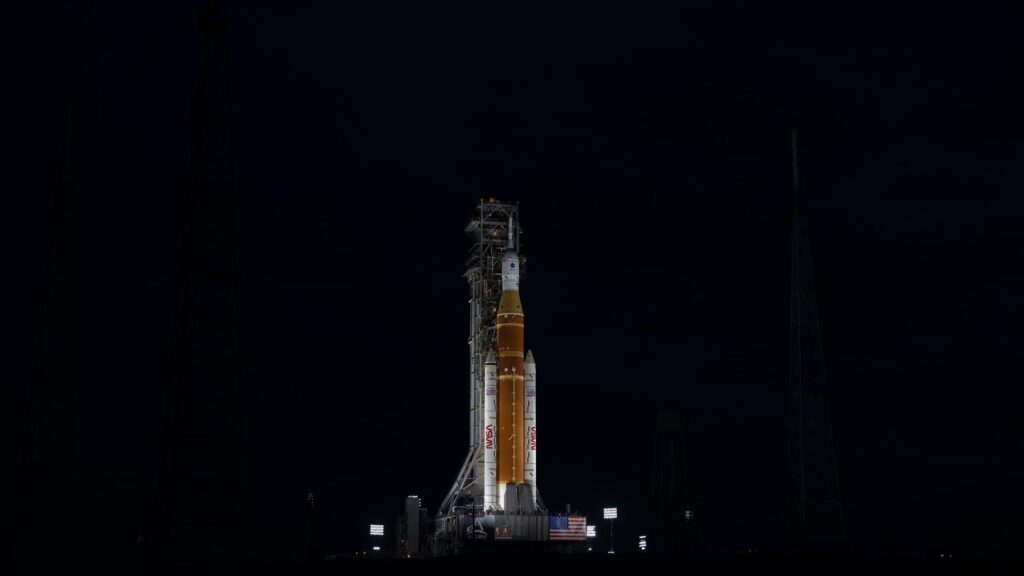
From Earth to Orbit — The Moon Awaits Again.
NASA’s Artemis II mission marks a historic turning point in space exploration, becoming the first crewed journey toward the Moon in over five decades. The mission will test NASA’s next-generation deep-space systems and set the foundation for a sustainable human presence on the lunar surface.
📌 Table of Contents
- Mission Overview
- Launch Timeline & Milestones
- Crew Members
- Mission Objectives
- Key Preparations
- What Comes After Artemis II?
🌕 Mission Overview
Artemis II is the first crewed flight of NASA’s Space Launch System (SLS) rocket and Orion spacecraft. Unlike Apollo-era missions, Artemis is designed to support long-term lunar exploration, serving as a stepping stone to Mars.
🗓️ Launch Timeline & Milestones
The mission is targeting a launch no earlier than February 5–6, 2026, from Launch Pad 39B at Kennedy Space Center, with backup windows extending into April.
- January 17, 2026: Fully stacked SLS rocket completed a 4-mile rollout
- Rocket height: 98 meters
- Rollout duration: 12 hours
Upcoming milestones include a wet dress rehearsal, final system checks, and a Flight Readiness Review before launch approval.
👨🚀 Artemis II Crew
- Reid Wiseman – Commander (NASA)
- Victor Glover – Pilot (NASA)
- Christina Koch – Mission Specialist (NASA)
- Jeremy Hansen – Mission Specialist (Canadian Space Agency)
This diverse four-member crew represents international cooperation in modern space exploration.
🎯 Mission Objectives
The 10-day mission will send astronauts around the Moon without landing, validating critical systems before humans touch down again.
- Test Orion’s life-support systems
- Validate flight software and displays
- Assess crew performance in deep space
- Build on lessons from Artemis I (2022)
🛠️ Key Preparations & Safety Focus
NASA confirms that the SLS rocket is nearly launch-ready, while Orion undergoes final processing before integration. Agency leadership continues to stress that crew safety comes before schedule, reflecting lessons learned from previous delays.
🔭 What Comes After Artemis II?
Artemis II clears the path for Artemis III, which aims to land astronauts on the Moon in 2027–2028. Beyond that, Artemis IV will help establish a lunar space station, enabling long-term human operations beyond Earth.
More than 50 years after Apollo, Artemis II reignites humanity’s lunar ambitions—this time, not just to visit, but to stay.
 🚀 One rollout. Four astronauts. Humanity’s next leap toward the Moon.