“Markets Tremble as Global Tensions Rise — Investors Turn Cautious.”
Table of Contents
Market Closing Overview
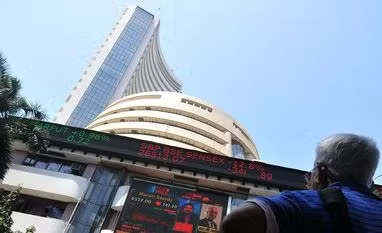
Indian stock markets ended sharply lower on March 13, 2026, as investors reacted to rising geopolitical tensions and surging crude oil prices. Both benchmark indices witnessed strong selling pressure throughout the session.
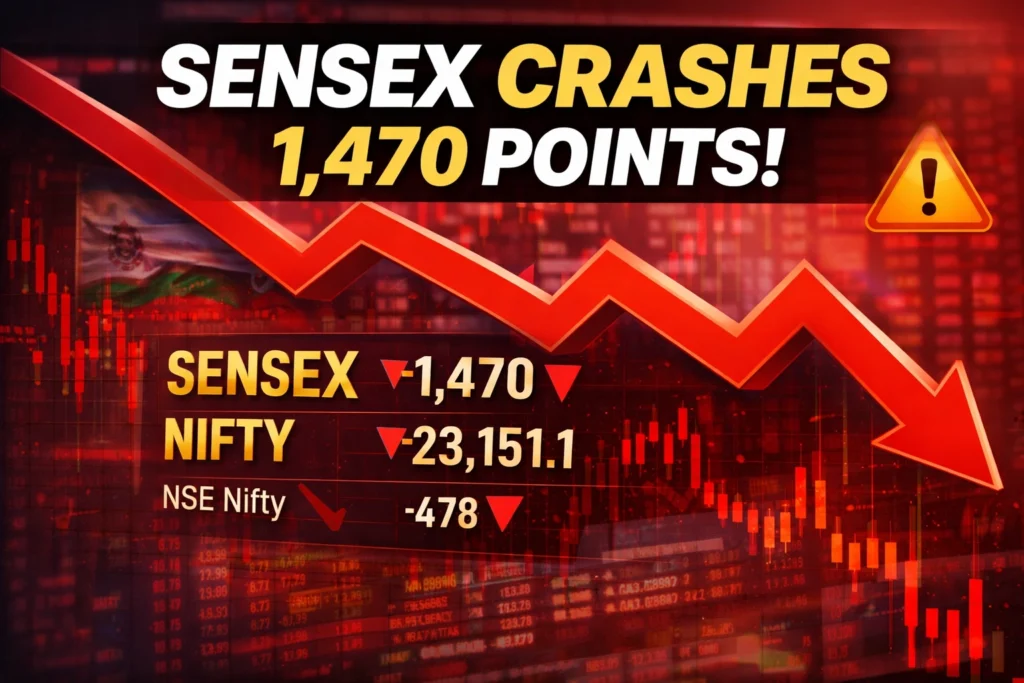
The BSE Sensex plunged nearly 1,470 points to close around 74,564, registering a steep 1.93% decline. Meanwhile, the NSE Nifty 50 settled at approximately 23,151.1, slipping below key technical support levels.
This drop extends the ongoing weekly decline, with the Sensex losing more than 2,800 points in just four sessions, signaling a strong bearish momentum in the market.
Why the Market Fell
Several macroeconomic and global factors contributed to the market downturn:
- Geopolitical tensions in West Asia, particularly involving Iran, triggered uncertainty across global markets.
- Crude oil prices surged, raising concerns about inflation and economic stability.
- India’s CPI inflation rose to around 3% year-on-year, slightly higher than expectations due to energy price pressures.
- Investors also fear a possible RBI interest rate hike in 2026 if inflation continues to rise.
- Weak global cues and cautious investor sentiment accelerated the sell-off.
Top Gainers & Losers
Top Losers
- Hindalco
- Larsen & Toubro (L&T)
- Tata Steel (down nearly 5%)
- UltraTech Cement
- JSW Steel
Metal stocks, auto companies, and PSU banks faced the sharpest declines, with many falling between 3% to 5%.
Top Gainers
- Tata Consumer
- HUL
- Bharti Airtel
Market breadth remained negative, with approximately 2,401 stocks declining compared to 1,653 advances. Both midcap and smallcap indices also dropped around 2.5%.
Almost all sectoral indices closed in the red during the trading session.
- Nifty Auto remained under pressure and is now down nearly 12% year-to-date.
- Metal stocks were heavily sold amid global uncertainty.
- Media and PSU banking stocks also faced significant losses.
- The banking index slipped below the 55,300 support level, indicating continued bearish sentiment.
Despite the fall, retail participation in the market remained active, particularly in select auto stocks such as MSIL and Mahindra & Mahindra.
Market Outlook
Technical analysts believe that the Nifty may test the 23,000–23,200 range if the current support levels break further.
The formation of lower highs and lower lows on charts suggests continued weakness in the near term. Investors are closely watching global developments, crude oil trends, and geopolitical updates for direction.
FII & DII Activity
Foreign Institutional Investors (FIIs) have been consistent sellers in recent sessions.
- FIIs sold approximately ₹3,230 crore worth of equities in earlier sessions.
- Domestic Institutional Investors (DIIs) provided support by purchasing around ₹7,941 crore worth of stocks.
The RBI repo rate remains at 5.25% with a neutral stance, but rising inflation expectations could reduce the chances of rate cuts in the near future.
Disclaimer
This article is for informational and educational purposes only and should not be considered financial or investment advice. Stock markets are subject to risks and volatility. Investors should conduct their own research or consult a qualified financial advisor before making any investment decisions.
Read more