
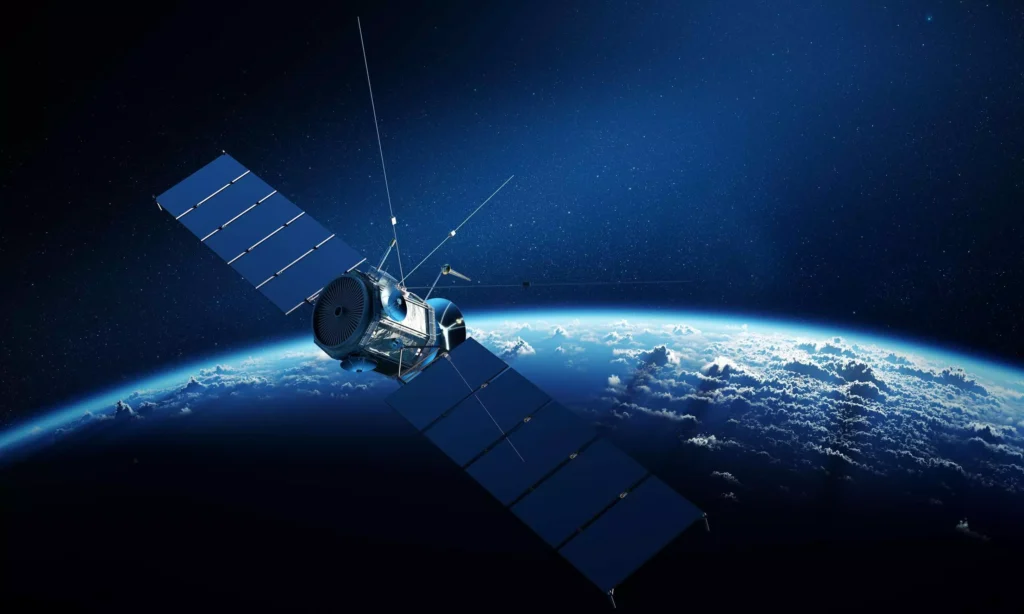
From protecting Earth to a fiery farewell — a legendary mission ends.
NASA’s Van Allen Probe A, a 1,300-pound spacecraft launched in 2012, has officially reentered Earth’s atmosphere after nearly 14 years of groundbreaking research. The probe helped scientists understand the powerful radiation belts that protect our planet from dangerous solar activity. Its reentry on March 11, 2026, marks the end of an extraordinary mission in space science.
Table of Contents
- Event Timeline
- Mission Background
- Debris and Safety Assessment
- What About Probe B?
- Broader Space Debris Context
Event Timeline
NASA’s Van Allen Probe A officially reentered Earth’s atmosphere on March 11, 2026. According to the U.S. Space Force, the spacecraft descended over the eastern Pacific Ocean at approximately 6:37 a.m. EDT (10:37 GMT).
The predicted reentry window had been estimated around March 10 at 7:45 p.m. EDT, with a 24-hour uncertainty margin due to the uncontrolled nature of the spacecraft’s descent.
The probe originally launched in August 2012 along with its twin spacecraft, Probe B. While the mission was initially designed to last only two years, it successfully operated until 2019 and remained in orbit far longer than expected.
Mission Background
Van Allen Probe A was designed to study the mysterious Van Allen radiation belts surrounding Earth. These belts are two donut-shaped regions filled with charged particles trapped by Earth’s magnetic field.
They play a critical role in protecting our planet from:
- Solar wind
- Cosmic radiation
- Space weather events
Data collected from the probes significantly improved scientists’ ability to predict how solar storms can impact:
- Satellites
- Astronaut safety
- Power grids on Earth
- Communication systems
Recent increases in solar activity expanded Earth’s upper atmosphere, creating additional drag that gradually pulled the spacecraft closer to Earth. This accelerated the orbital decay and led to its earlier-than-expected reentry instead of the projected 2034 timeline.
Debris and Safety Assessment
During atmospheric reentry, most parts of the spacecraft burned up due to extreme heat and friction. However, some small components may have survived the descent.
NASA calculated the probability of debris causing harm at approximately 1 in 4,200 (0.02%). Because around 70% of Earth’s surface is covered by oceans, the likelihood of debris reaching populated areas was extremely low.
Fortunately, no injuries or land impacts were reported. Both NASA and the U.S. Space Force closely monitored the spacecraft during its final descent and confirmed a safe reentry event.
What About Van Allen Probe B?
The twin spacecraft, Van Allen Probe B, remains in orbit and continues contributing valuable data for space weather research.
Scientists estimate that Probe B will not reenter Earth’s atmosphere before 2030. However, increased solar activity could accelerate atmospheric drag and potentially shorten its orbital lifespan.
Broader Space Debris Context
The reentry of Van Allen Probe A highlights the growing challenge of managing defunct satellites and space debris.
Currently, more than 36,000 tracked objects orbit Earth, including inactive satellites, rocket fragments, and debris. Uncontrolled reentries occur regularly, though most objects burn up completely in the atmosphere.
Space agencies worldwide are increasingly focusing on responsible satellite disposal strategies to reduce long-term space debris risks.
Van Allen Probe A leaves behind an incredible legacy of scientific discovery. Its mission significantly improved our understanding of Earth’s radiation environment and helped protect modern technology from space weather threats.